Contemporary Professional Learning for Audio and Music
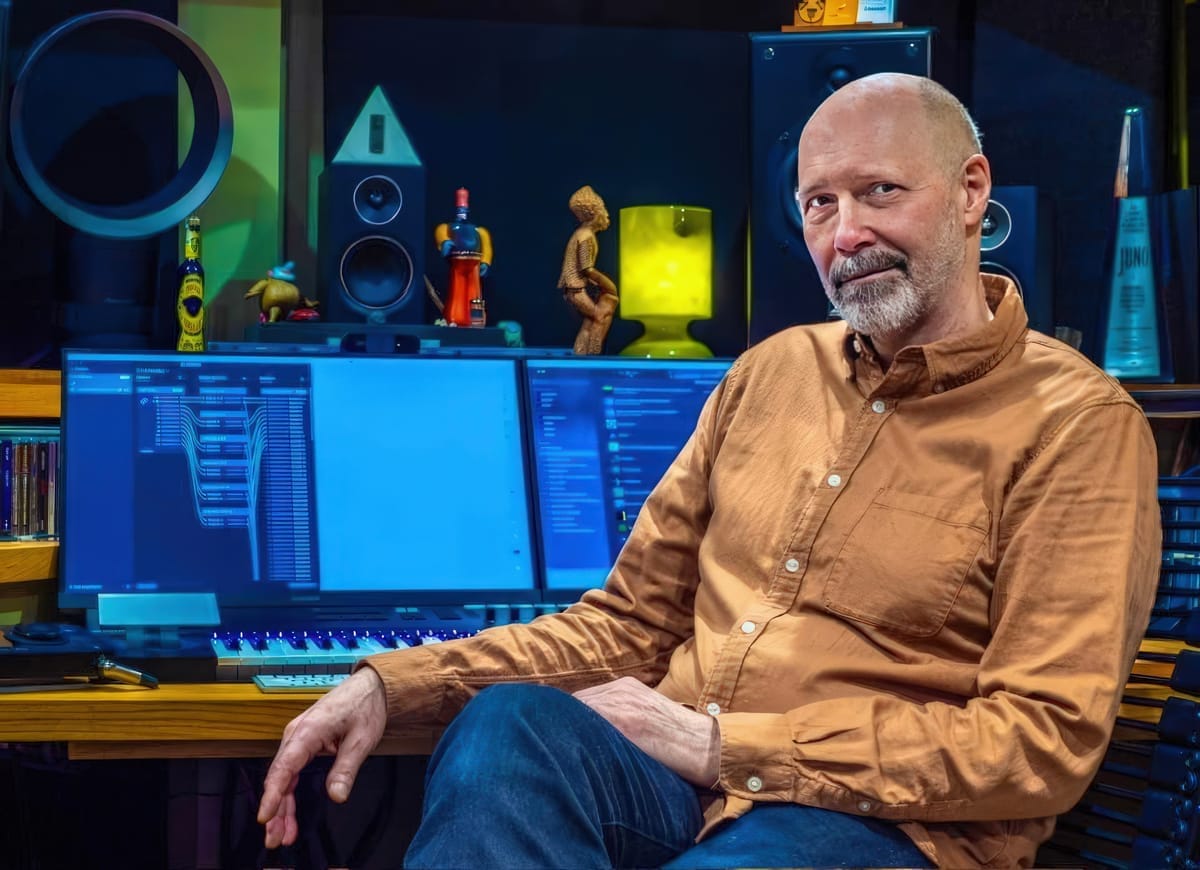
By Dr. Paul Novotny
Professional learning is a term that I had not heard until I asked my online music mastering class at Centennial College — “why they were studying audio and music at a post-secondary institution?” Several students said that they desired a “professional learning” experience and contrasted it with a sole-operator, do-it-yourself YouTube approach. Students admitted that they did not know how to approach self-learning and viewed professionally curated coursework as an efficient and promising way to work toward their future. Interestingly, none of them considered the cultural capital that an institutional degree or certificate provides on a resume, whilst they are all highly motivated by good grades.
I found that the term Professional Learning usually associates with the faculty of education. It involves additional qualifications and certification for teachers and principals at elementary, secondary, and district levels, as well as educators interested in ongoing subject specific learning to enhance their professional abilities.
There are many approaches to teaching and learning. Complicating this is artificial intelligence. Information, ethics and evaluation of student outcomes have become uncertain, and students worry that their expensive educations may become irrelevant. This is challenging the happiness of young people.
In an interview with Dr. Andrew Huberman, a neuroscientist at Stanford University School of Medicine, Poppy Crum (Dolby Laboratories former Chief Scientist) states that students must still “do the work” in order to learn. Learning makes one happy. I ask two questions: what exactly is “the work” to be done by a student, and what are the effective approaches for a student who wants to learn formally. This tertiary level of education can involve a university, college, polytechnic, or vocational school.
Interdisciplinary internships, apprenticeships and mentorships are often viewed as effective components of professional learning. In my career I’ve been rewarded by many real-world apprenticeships. Post-secondary institutions often involve internships. They are short-term positions in the workplace and provide exposure to workflows, practices and professional culture, meanwhile apprenticeships are a time-honoured way to train and pass on an ethos that involves a lifetime of genuinely hard-won artisan practices, concepts and values. Mentorships involve one-on-one guidance in a company or educational institution.
My interdisciplinary learning in music and sound came from professional internship, apprenticeship and mentorship in four complimentary areas, 1) music performance, 2) audio engineering, 3) composition, and 4) education.
As an aspiring musician my bass playing apprenticeship took place on the bandstand from the age of 14 years. I began learning WWII and Dixie Land jazz songs from the elders. I also had mentorship through private lessons. Self-study involved books, specifically Carol Kaye’s electric bass method.
As an audio engineer my apprenticeship started in the dubbing room where 1 was taught to transfer daily rushes of film-sound audio from pilot tone resolved ¼” tape to 16 or 35mm magnetic film. I also did cassette duplication which involved dubber maintenance and quality control of the product. I’ve always been fascinated with tape-recorders and microphones, this led to my pursuit of advanced recording, mixing, and mastering practices.
My composition mentorship took place while operating in advertising. I worked directly with American musician and composer Dick Halligan, best known as a founding member of the jazz-rock band Blood Sweat and Tears. For two years, assisting Dick for Ogilvy and Mather in Los Angeles, I midi-orchestrated his Canadian market jingle compositions for Mattel products like Barbie and Hot Wheels. This was a well-paid professional mentorship.
Dick was a professional composer who had earned his master’s degree in music theory and composition from the Manhattan School of Music, and he applied his art and craft to the 1969 Grammy Award winning band Blood Sweat and Tears, but advertising sustained him economically and that was a life lesson. It set my expectation for how to have a sustainable career in the music business. He taught me the necessary composition and arranging skills for small and large orchestral ensembles in a strictly timed media environment. This professional learning experience prepared me to compose and produce the 2001 orchestral theme and full music library for the “CBC National News,” George Stroumboulopoulos’s hard-hitting theme for CBC “The Hour,” and the original attention-getting CBC “News Now” mnemonic theme.
To date, my work in media and communications has been extensive and very interdisciplinary, involving audio post-production, sound-design, voice-casting and direction.
In 1979, while I played jazz 5-nights a week with the legendary Canadian pianist Brian Browne (1974 Songwriter of the Year award winner) in Peterborough, Ontario at Peppers Restaurant, I began supply-teaching at high schools during the day. In 1991 I began teaching bass at McMaster University and Mohawk College in Hamilton. In 2008 I began teaching a variety of courses at Humber College including bass, screen media composition, and music business. I also supervised 4th year artist/producer teams in their final capstone projects toward their undergrad degree in music. Now with an MA in music composition and a Ph.D. in musicology, successful completion of these degrees helps to certify that my teaching is at a professional level.
These life-experiences are the self-learning work that I did to sustain myself and prepare for the future. For today’s students the possibilities for self-learning are exploding, but economic sustenance is tough. Online courses and one-on-one lessons over zoom have become readily available to anyone with a laptop computer or hand-held device. Myriad YouTube videos with AI summary or subscription plans to videos and pre-packaged courses by eminent professional practitioners make me ask—why do my students consider that “professional learning” at a post-secondary institution is still valuable? Perhaps understanding the history of university level education is helpful.
On July, 02, 2025 Micheal Fisher (known as “The Augmented Educator” on Sub Stack) wrote, “in 9th-century Italy, the medical school at Salerno drew students from across Europe, offering the earliest prototype of a Western University.” This learning environment was dependant on listening to a lecture in a group meeting. The class lecture is a one-way, real-time form of communication that over centuries has evolved into Socratic social seminars, collaborative assignments and active engagement with tools of the day. The “Thayer Method” is rooted in this approach.
In 2002, Amy Shell, an Assistant Professor at the United States Military Academy, West Point, authored a paper entitled “The Thayer Method of Instruction at the United States Military Academy: A Modest History and Modern Personal Account.”
In 1817, Sylvanus Thayer became superintendent of the US Military Academy. His “Thayer Method” remains in wide use at all levels of education, and it provides the basis for “student defence” as a durable teaching method.
Supervised by Thayer or another instructor, 10 to 15 cadets attended 3-hour classes and were expected to arrive prepared to defend their work to the class. Students would illustrate their work on a chalkboard, give a spoken defence and then respond to questioning from the supervisor. Each day the supervisor would evaluate oral, written, and chalkboard illustrations. Weekly or monthly classes would then be re-sectioned based on the accrued merit of each student. This enabled instruction to better meet the individual abilities of the students. The Thayer method placed the onus on the student to self-learn and then come to class to illustrate and defend their work. Hence classmates learned from each other in a social class environment.
This is how I try to operate my online classes. Professional teaching places the onus on the teacher to instruct students how to self-learn, attend class with regularity, and articulate and defend their findings. This is social learning, and it is metaphorically similar to my social learning experience on the bandstand. It results in good class attendance and motivated participation.
In my audio mastering course, we have a weekly assignment in Logic that the class examines and discusses together. I teach the mastering process and ethos—the “how and why” of audio/music mastering. When students share their decisions (good and bad) it amplifies the value of class-time. Everyone learns together. As my colleague Dr. Nyssim Lefford argues, classroom learning is a place where students can boldly experiment and not suffer the stigmatic consequences of failure in a professional environment. Social classroom learning also teaches empathy, something professional internships and apprenticeships may not provide. Effective professional learning is social and enriched by cultural diversity.
My students are predominantly from international origins, Bangladesh, Argentina, Brazil, and Korea. They study alongside domestic Canadian students from urban Toronto, rural Ontario and other Canadian provinces. This integration adds a diverse contextual dimension to the social learning experience and the course topic.
This context creates holistic learning. It involves a critical balance of objective science with real world cultural context and practice that gets synthesised by the student during their unique learning experience. It involves cross-domain rationales and adjacent metaphoric associations that deepen understandings and shape a student’s ethos for life. This forms a durable foundation for the student and helps guide them to find their professional bliss.
The word professional means “engaged in a specific activity as one’s main paid occupation rather than as a pastime.” (Oxford Dictionary of English, 2026). One assumes that a professional is competent, skillful and assured, whilst for a professional teacher, the advantages of belonging to a group of like-minded peers becomes essential for continued learning.
Industry professionals and educators must be life-long-learners and toward that they aggregate into guilds, societies, fraternity’s and unions. Teachers attend scholarly conferences as a way to share knowledge about the latest advancements in research, curriculum and pedagogy.
This system is how institutional “professional learning” works to prepare the next generation with advancements in practice and technology. The system provides credible science, rationales and concepts, efficient practices, pin-pointed semantic language, access to industry tools and technology, and introduces essential awareness of the business climate.
I believe it is necessary for audio and music educators to attend conferences such as “Innovation in Music,” “The Audio Engineering Society,” (AES) and the “Society for Music Production Research” (SMPR), and the notable Pan-American Audio Educators Conference, (PAAEC).
Past president of the AES, John Krivit has assembled an international Facebook group of audio educators entitled “Hey Audio Student” with 228,500 International members. In 2025 he started the PAAEC, and it is dedicated to sharing curriculum and pedagogy. In attendance are distinguished professors and also developers who make the software and hardware tools used to teach audio, music and sound. Curriculum, pedagogy, technology and best practices are advancing rapidly so educators are constantly tasked with synthesizing knowledge and delivering the salient methods necessary for student self-learning.
Economics in the music, audio and education businesses are highly challenged, and this affects the way teachers, pedagogy and educational experiences must organize for the future. For schools that are not located in large metropolitan areas it is economically necessary to involve independent professional academics from around the world in online classrooms and courses. This is an abundant opportunity for a new generation of independent educators. In the online learning environment social learning can still happen effectively.
The teacher must instruct the student in how to self-learn and defend, and the student must “do the work” of self-learning and then share and defend their work with the class while the course director guides.
Currently, Generative Music AI (GMAI) and AI Large Language Models (LLMs) are disrupters. Many creators and educators are asking “is this really what we want?” To understand the risk and reward from these new technologies a global brain trust that is tasked to establish guardrails is logical. I ask, when and will that happen?
Now, more than ever it’s incumbent upon institutional education to respond with ethical guidelines and compelling in person and online social learning environments, where professors, teachers, and students utilize and practice the essentials of self-learning and defence of knowledge in a safe space. I argue, that is contemporary “professional learning,” and regardless of AI, the work will always have to be done by teachers and students.
Dr. Paul Novotny is a Canadian bassist, composer, record producer, teacher and doctoral researcher whose career spans jazz performance, screen-media audio production, and music academia.
Linkedin - www.linkedin.com/in/paul-novotny-ma-ph-d-1832b35
Website - www.paulnovotnymusic.com